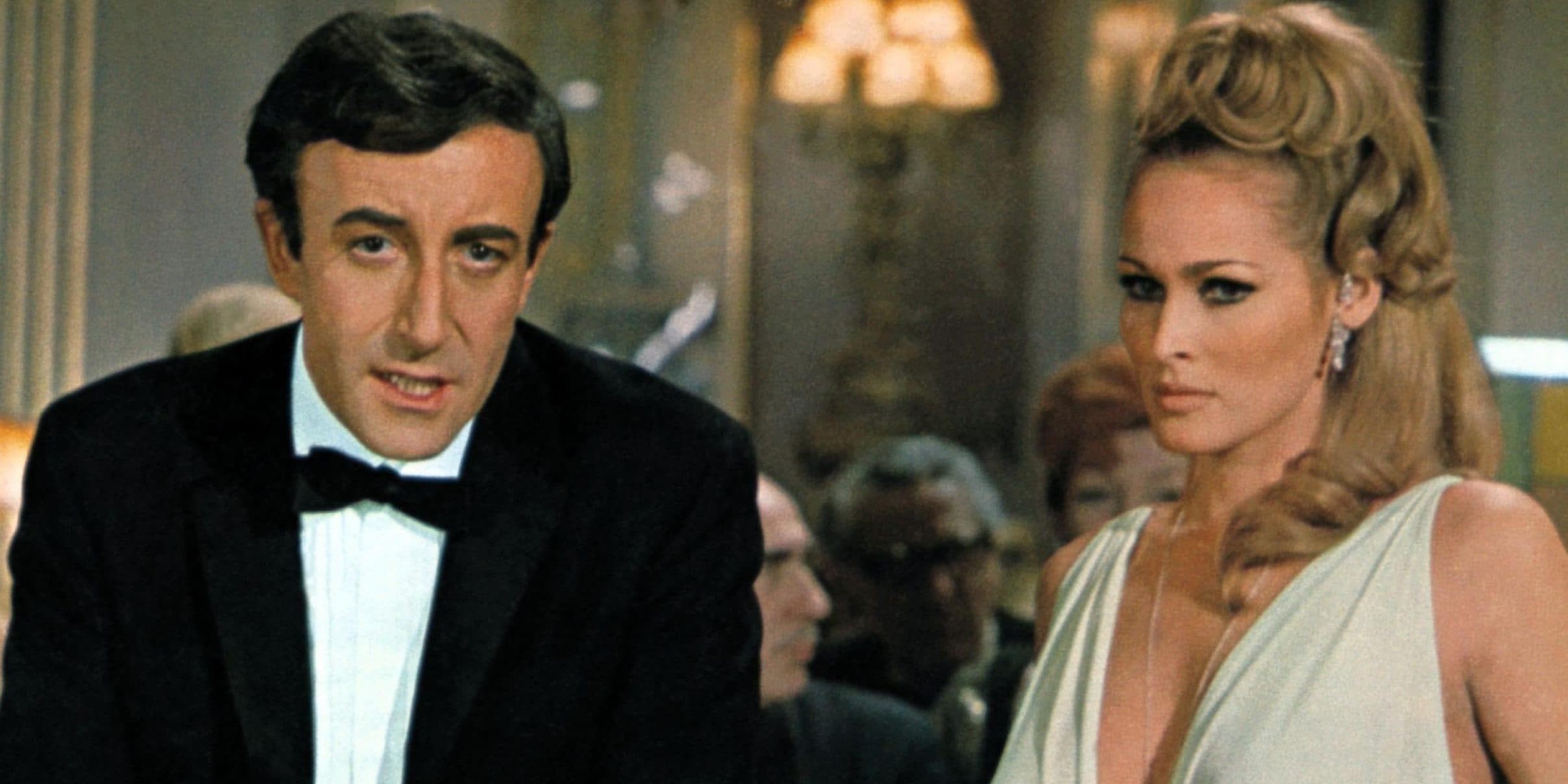
James Bond movies are famous for their spies, thrilling action, and sophisticated style. Since the 1960s, whenever a cool action hero appears, you can be sure parody isn’t far behind. While Austin Powers is a popular parody spy today, the ’60s had its own versions, such as the 1967 film Casino Royale.
While similar to the spy spoof In Like Flint (released the same year), Casino Royale relies much more on over-the-top physical comedy and general mayhem to drive its plot. Despite carrying the James Bond name, it only holds a 24% rating on Rotten Tomatoes. However, that low score actually highlights how unusual the film is and why it’s worth watching to experience it for yourself.
Casino Royale Explores the Absurdity of James Bond
Though named after Ian Fleming’s first James Bond novel, the movie Casino Royale isn’t the typical spy story of a single agent taking down a criminal group. Instead, it features multiple spies all using the James Bond identity, all in training to defeat a criminal organization. This film was the first to really explore the concept of multiple Bond agents and may have even originated the idea.
The story’s premise – James Bond coming out of retirement to lead MI6 and stop SMERSH – leads to a bizarre situation. He needs to train new 007 agents to resist the charms of dangerous female spies, as many had previously fallen victim to their advances. This results in a chaotic climax with multiple Bonds involved, and a completely unexpected, almost comedic ending reminiscent of Monty Python.
By 1967, with its fifth film, You Only Live Twice, the James Bond series had established many recognizable patterns. While Bond hadn’t yet become a self-parody on screen, there was plenty of opportunity to playfully satirize the character.
Casino Royale successfully satirizes classic Bond tropes – like his gadgets and numerous love interests – while retaining a distinctly British wit that keeps the film entertaining despite its over-the-top elements. While it doesn’t rank among the greatest Bond or spy films, it’s a prime example of self-aware parody and demonstrates that poking fun at established formulas has long been a part of filmmaking.
Casino Royale Isn‘t Afraid to Poke Fun at the Iconic Spy
Most viewers likely didn’t recognize the humor in James Bond until Roger Moore brought a playful, over-the-top style to the films, but the potential for comedy was always present. The series always featured outlandish villains and ridiculously ambitious schemes – plenty of material for satire, and Casino Royale fully embraced that opportunity.
A great illustration of this is a scene with Peter Sellers, where his character is in training, and everyone around him is practicing karate – something Sean Connery often did – or trying out new gadgets. It highlights that while these things are entertaining on screen, there needs to be a believable process of testing and development, and that process is bound to have some awkward moments.
The world of espionage in Casino Royale is filled with constant suspicion, shown in moments like Sellars unexpectedly punching someone for a friendly airport greeting. Even seemingly small details, like Bond subtly judging an inspector’s accent, are played for laughs. This mix of distrust and dry humor might not feel groundbreaking today, but it cleverly satirizes the typically serious and stoic tone of the James Bond franchise.
Casino Royale is a Mess, But One That Deserves a Place in Spy Cinema
While Casino Royale isn’t perfect – it can be a bit chaotic and overly complicated for a typical spy movie – it successfully achieved its goals, and that’s why it remains a significant film. Importantly, it feels like a natural addition to the Bond series, unlike some other attempts that strayed too far and didn’t quite work.
While Casino Royale isn’t flawless and its low Rotten Tomatoes score is undeserved, its impact on later spy comedies, especially Austin Powers, often goes unnoticed. Austin Powers became a hugely popular comedy, and the film borrows elements from Casino Royale, like the use of the song “The Look of Love.” Despite any flaws, Casino Royale has left a significant mark on film and deserves recognition for its lasting influence.
Over the years, Casino Royale has become a classic spy parody, and it deserves to be appreciated despite its flaws. From the performances—especially Peter Sellers’—to its influence on later films, it’s a uniquely important and quirky entry in the genre. While it might not be essential viewing for everyone, it’s certainly worth watching at least once and recognizing its impact on spy movies.
Found an error? Send it so it can be corrected.
Read More
- The Division Resurgence Best Weapon Guide: Tier List, Gear Breakdown, and Farming Guide
- Kagurabachi Chapter 118 Release Date, Time & Where to Read Manga
- Last Furry: Survival redeem codes and how to use them (April 2026)
- Clash of Clans Sound of Clash Event for April 2026: Details, How to Progress, Rewards and more
- Gold Rate Forecast
- ‘Project Hail Mary’s Soundtrack: Every Song & When It Plays
- Top 5 Best New Mobile Games to play in April 2026
- Guild of Monster Girls redeem codes and how to use them (April 2026)
- Genshin Impact Version 6.5 Leaks: List of Upcoming banners, Maps, Endgame updates and more
- All Mobile Games (Android and iOS) releasing in April 2026
2026-04-12 04:07