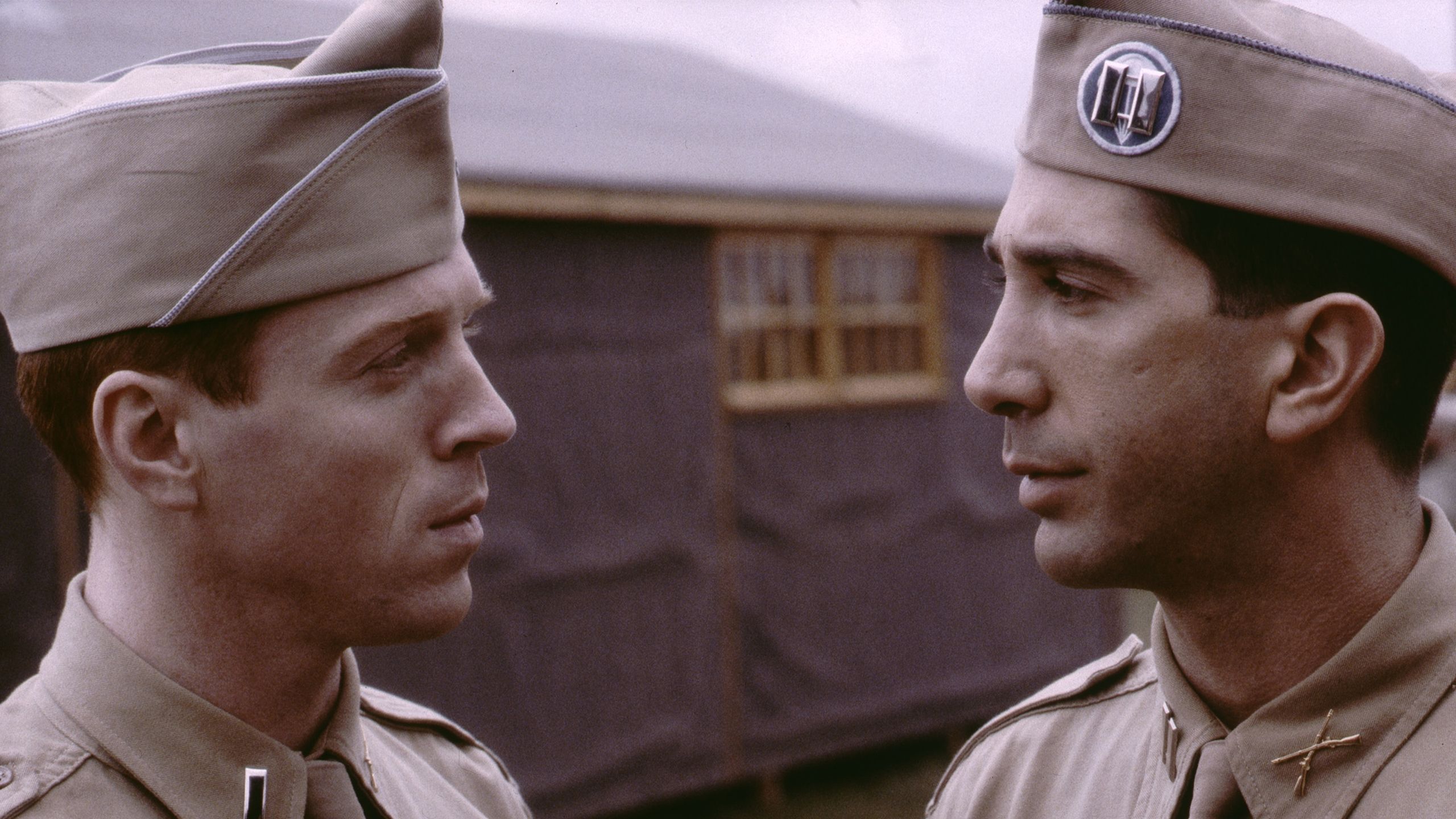
Eighteen years after the acclaimed HBO miniseries Band of Brothers first aired, a true sequel appeared on the same network. Band of Brothers is widely considered a masterpiece – a captivating and emotional series brought to life by a talented cast and crew.
Considered a landmark World War II drama, Band of Brothers remains the standard by which all subsequent war series are judged. This is especially true for shows like The Pacific and Master of the Air, as they were also created by the same team – Tom Hanks, Steven Spielberg, and Gary Goetzman.
Look, everyone keeps comparing WWII shows, and while there are similarities to Band of Brothers, the real follow-up, in my opinion, is Generation Kill. It’s set in a completely different conflict – the Gulf War – and comes from a fresh, incredibly talented team. This seven-part series isn’t just inspired by a book, it is Evan Wright’s 2004 book of the same name, which actually started as a series of articles for Rolling Stone. It’s a gritty, immersive experience that truly earns the Band of Brothers legacy.
The series depicts the experiences of soldiers from the 1st Reconnaissance Battalion of the U.S. Marine Corps during the initial months of the Iraq War, specifically March and April of 2003. Actor Lee Tergen portrays a journalist (who is not named in the show) who lives with and reports on the battalion’s activities.
David Simon, a highly influential television creator, developed the series alongside Ed Wright and Ed Burns—a frequent collaborator known for his work on shows like The Wire, The Plot Against America, and We Own This City. While seemingly different—one a stark depiction of desert warfare and the other a classic story of heroism in Europe—Generation Kill and Band of Brothers actually share surprising similarities.
Generation Kill Is More Like Band Of Brothers Than Any Show That’s Come After
Everyone always mentions The Pacific and Masters of the Air when talking about shows that followed up Band of Brothers, but honestly, as a big fan, I think Generation Kill is way closer in spirit to what made Brothers so great. Both shows really nail this approach: they take this massive, overwhelming war and focus it all through the experiences of just one small unit. It makes everything feel so much more personal and impactful.
Both shows primarily focus on a single battalion – the 1st Recon in Generation Kill and the 2nd Airborne in Band of Brothers. This close focus, following individual soldiers throughout the entire war, helps us understand the personal impact of conflict.
These aren’t broad historical accounts of wars like World War II or the Iraq War. Instead, they focus on the individual experiences of soldiers. By following the same group of people throughout, we gain a deeper understanding of the realities of war than we would from a more sweeping overview. And importantly, what these series reveal about war isn’t positive.
The title Generation Kill is fitting, especially when you consider Band of Brothers. The soldiers of Easy Company, who were real people, were often called the Greatest Generation. But what do you call the soldiers who fought in the Iraq War, a conflict so different from World War II, where it wasn’t always clear who the enemy was?
Both Band of Brothers and Generation Kill show the complicated reality of war, moving beyond simple heroic narratives. Band of Brothers subtly acknowledges this complexity with difficult scenes – like the treatment of Dutch women or a soldier killing a suspected Nazi commander – illustrating war’s harsh effects. Generation Kill further explores this nuanced perspective.
The Pacific Is Too Different Of A Show To Be Band Of Brothers’ Successor

When people look for another series like Band of Brothers, The Pacific is often suggested. It shares a similar format and many of the same creators. However, The Pacific is distinct enough that it doesn’t quite feel like a true follow-up to Band of Brothers.
While both The Pacific and Band of Brothers are set during World War II, The Pacific offers a unique experience with its own distinct style and pace. It’s an excellent show, but different from Band of Brothers. Specifically, The Pacific tells the stories of several units within the 1st Marine Division as they fight throughout the Pacific Theater.
Although this approach lets us see more of the war than focusing on a single unit, it can make it harder to connect with the characters. The Pacific realistically portrays the devastating impact of war by following individuals until their death, then shifting to the next, emphasizing the constant fighting and heavy casualties.
Compared to Band of Brothers, The Pacific is a darker and more harrowing series. It realistically captures the slow, dangerous, and agonizing experience of fighting in the Pacific jungle. While both Band of Brothers and Generation Kill have moments of dark humor, The Pacific doesn’t, making it a powerful but incredibly difficult show to watch.
Generation Kill Is One Of The Greatest War TV Shows Of All Time

Even if you didn’t know it was made by the creators of Band of Brothers, Generation Kill is still a truly exceptional war series. It offers a remarkably realistic portrayal of a major conflict from the early 2000s, showing the relentless and often grueling experience of soldiers moving through Iraq – town after destroyed town.
Honestly, watching this felt less like a daring invasion and more like… well, a frustrating logistical nightmare. We see missed orders, soldiers constantly rubbing each other the wrong way, and this endless cycle of setting up and breaking down camp. It’s a far cry from the intensity of D-Day. Skarsgård and Ransone’s characters felt less focused on fighting the enemy and more likely to just start swinging at each other – it was almost boring, if you can believe it.
The series starts with a quick burst of confusion, showing how close the Marines are to danger – a realization that often doesn’t hit them until they’re already fighting. Generation Kill masterfully blends the everyday routines of military life with the intense fear of war, creating a viewing experience that feels both familiar and disturbingly different. Like Band of Brothers explores a romanticized version of the past, this show examines contemporary America, and both series reveal surprising truths about the stories we tell ourselves about those worlds.
2026-07-28 01:48