
I was so excited to see “100 Nights of Hero” come to life on screen! It’s based on a classic story from One Thousand and One Nights, and Isabel Greenberg’s graphic novel is just stunning. The movie follows a woman who’s basically abandoned by her husband in this lonely castle. Things get really complicated when she gets caught up in a messy emotional situation with her husband’s charming friend and, thankfully, has her incredibly loyal maid by her side. Julia Jackman did an amazing job bringing it all to life with a fantastic cast!
Hugh Jackman’s new film, 100 Nights of Hero, features a talented cast including Maika Monroe (known for Longlegs), Emma Corrin (Deadpool & Wolverine), and Nicholas Galitzine (Masters of the Universe). Other stars include Amir El-Masry, Charli XCX, Richard E. Grant, and Felicity Jones. After premiering at the 2025 Venice International Film Festival, the film quickly gained critical acclaim, becoming the highest-rated fantasy movie of the year. It initially received a 96% approval rating on Rotten Tomatoes, which has since settled to 80%.
Before the film’s release, Tatiana Hullender from ScreenRant spoke with Julia Jackman and Nicholas Galitzine about 100 Nights of Hero. Julia Jackman, who wrote and directed the movie, shared that adapting the graphic novel by Greenberg and the original Middle Eastern story felt both exciting and overwhelming. She explained she felt a lot of pressure, as she wanted to build on the story’s history and continue to inspire audiences.
Jackman likened the experience to a Rorschach test, noting that audiences brought their own interpretations and drew on the original stories that influenced the work. Ultimately, her main aim was to build a grand, expansive world using a small, efficient, and independent production style.
Jackman reflected on her visual style for the film, compared to the original graphic novel, saying she adored 100 Nights of Hero and found it both inspiring and hard to move past. She enjoyed having the creative freedom to build her own world, which also led her to make some updates. Most of these changes were based on how the world itself had evolved over the nine years since the book was published.
The graphic novel came out in 2016, and a lot has changed since then. To stay true to the story and reflect how things have evolved, some updates were necessary. I had to consider things like what a villain would be like today and how to adapt the love story for film, where you have limitations on length and setting.
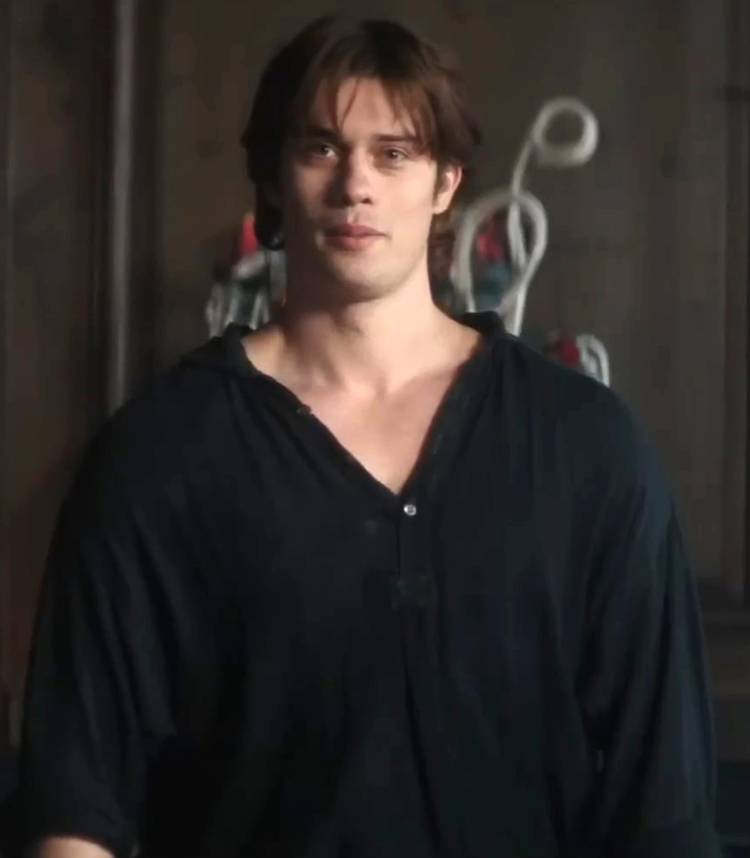
A major change in adapting 100 Nights of Hero for the screen involved the character of Manfred, specifically his villainous nature. Jackman highlighted that Manfred is surprisingly forward-thinking for his time, especially because he’s a good listener – a trait not often seen in men within the story’s world. However, he jokingly added that Manfred’s motivations aren’t what they seem. The film reveals Manfred tries to impress a woman by pretending to be someone else, but ends up changing himself in the process.
Jackman’s wish to redefine Manfred as a villain also made him want to portray a more human side, exploring the idea that everyone is shaped by their upbringing and that no one considers themselves truly evil. However, this doesn’t excuse Manfred’s actions; instead, it makes the challenges faced by the other characters even more significant.
Julia Jackman explained that Manfred grew up with strong expectations of how he should be, which makes it especially impactful when he’s shown as a flawed, relatable person. She believes that most people struggle with internal conflict and often lack the courage to act on their beliefs. The idea of someone changing but not fully, feeling conflicted and incomplete, feels much more realistic than a villain who is simply and consistently evil.
Jackman & Galitzine Also Wanted To Make The Movie’s Love Stories More Complex
You know, when I first met Manfred, I was immediately struck by how funny he was, but it quickly became clear there was so much more going on. He’s not just a comedic character; he really is the world of the story made flesh. He embodies everything that society stands for, both the good and the bad, and that’s what makes him so compelling to watch.
Absolutely. I’ve always been captivated by how much of a person is shaped by their background versus their own choices, because it immediately tells you a lot about the world they live in. For me, it was crucial to understand that my character, Manfred, is a result of how he was raised, but that doesn’t have to limit him. I definitely relate to that as a man. I started by portraying Manfred at his worst, but then allowed that tough exterior and his fixed beliefs to gradually soften as he encountered inspiring stories and people.
ScreenRant asked Julia about the central relationship between Cherry and Hero in the film. They praised the performances of Maika Monroe and Emma Corrin, and wanted to know how Julia worked with them to create that on-screen connection, especially considering the story’s emotional and ultimately hopeful, though sad, ending – even though it takes place in the afterlife.
I was glad people understood the moon wasn’t actually rescuing anyone! [Laughs] That detail came up a lot when adapting the graphic novel. In the original, the two characters are a couple throughout the whole story, and I really wanted to stay true to that ending – it’s the emotional core of the book, and I think the author, Isabel Greenberg, would agree. I wanted to start them in a place of confusion, though, a classic queer experience where you’re in love but don’t even realize it. In their world, why would you pursue something you feel is unattainable? No one asks you what you want, and honestly, no one really cares. Even if you did allow yourself to think about it, it could be incredibly painful because it feels impossible. So, I decided to begin the story there, especially from Cherry’s point of view. She firmly believes she’s straight, but she’s completely captivated by her friend – she finds her incredibly beautiful, hangs on her every word, and thinks she’s hilarious and wonderful, all while still believing she’s attracted to men.
I enjoyed watching the characters grapple with their feelings – Hero because of her social status, and Cherry because such a relationship was considered inappropriate. Developing their romance was a lot of fun, and I really wanted to showcase the deep connection they shared. While chemistry was important, what truly mattered was their intimacy in a world where she constantly had to maintain a facade. For her, falling in love meant finally having someone she could be truly herself with, away from public view. I’m probably setting expectations too high, though. [Laughs] It’s not about anything explicit, but rather the freedom to express her genuine emotions and natural mannerisms – simple things like making her own facial expressions and gestures – which is a big deal in her situation.
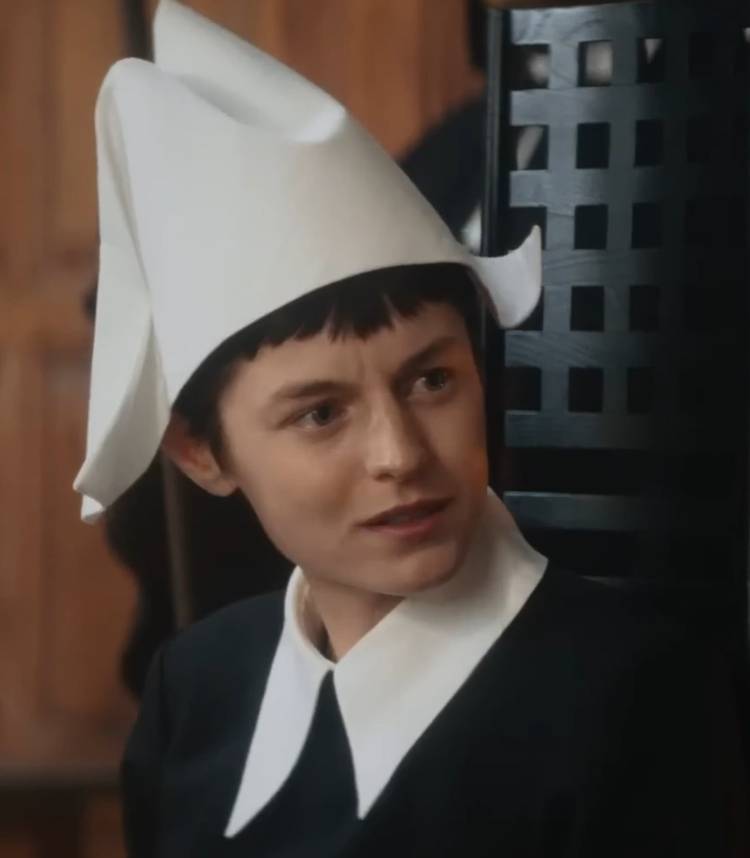
ScreenRant asked about the process of casting Charli XCX in the film. They were curious if the filmmakers approached her directly, knowing she was interested, or if they had already pictured her in the role while developing the story.
Honestly, as soon as I learned Charli was potentially interested, I was thrilled! I had no clue she even wanted the part, though. Thankfully, her agent, Ruby Kaye, was a huge supporter of the film and reached out to me. We set up a meeting in a hotel before her Glastonbury set, just to chat about the story and see if it felt right for both of us. I knew she was keen to be involved somehow, and I was definitely excited about the possibility. I already had a feeling she’d be perfect as Rosa, but meeting her in person completely confirmed it. Thankfully, she loved the idea and signed on – it was a huge win for the film!
Read More
- Clash Royale Best Boss Bandit Champion decks
- Vampire’s Fall 2 redeem codes and how to use them (June 2025)
- World Eternal Online promo codes and how to use them (September 2025)
- How to find the Roaming Oak Tree in Heartopia
- Mobile Legends January 2026 Leaks: Upcoming new skins, heroes, events and more
- Best Arena 9 Decks in Clast Royale
- ATHENA: Blood Twins Hero Tier List
- Clash Royale Furnace Evolution best decks guide
- Brawl Stars December 2025 Brawl Talk: Two New Brawlers, Buffie, Vault, New Skins, Game Modes, and more
- How To Watch Tell Me Lies Season 3 Online And Stream The Hit Hulu Drama From Anywhere
2025-12-04 00:02