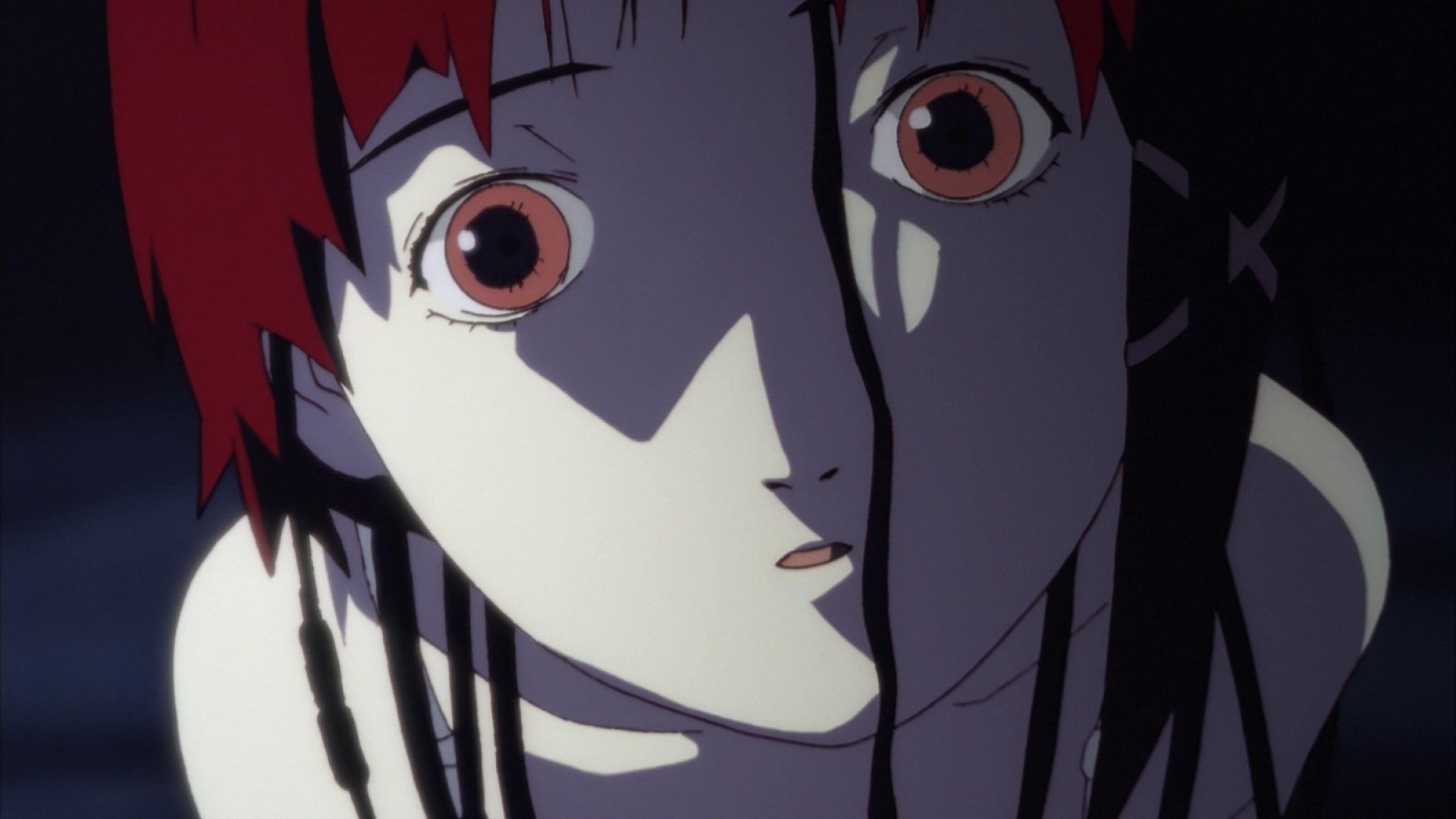
Psychological horror focuses on internal fears. Classic examples like Perfect Blue, Paranoia Agent, and Serial Experiments Lain create terror by exploring themes of lost identity, consuming obsessions, and a reality that feels broken. Other works in this genre challenge our sense of right and wrong, presenting morality as something disturbing and detached.
The most effective horror anime don’t rely on excessive gore. Instead, they build fear through psychological tension, hinting at unseen dangers, exploring characters’ inner turmoil, and focusing on the consequences of their actions. This approach creates a deeper, more lasting sense of dread than simply showing graphic violence.
Mima Loses Reality In Perfect Blue’s Twisted Narrative
Satoshi Kon’s Perfect Blue is an animated film that cleverly mixes the everyday life of former pop idol Mima with scenes from a TV drama she’s acting in. This creates a disturbing connection between how she appears to the public and her own personal anxieties. The film uses quick transitions between reality and what might be hallucinations, making the audience, like Mima, unsure of what is actually happening and reflecting her increasing paranoia.
One particularly striking scene contrasts a concert with a televised performance, and the sound of the protagonist’s scream reflected in a mirror highlights her growing inability to trust what she sees. The film’s real horror isn’t about shocking visuals, but about the protagonist’s sense of self falling apart as she feels trapped. The final confrontation, where her ex-manager Rumi impersonates her, is frightening because it portrays a deeply fractured mind, not because of any graphic violence.
Lil Slugger Ignites Mass Paranoia In Paranoia Agent
Satoshi Kon’s Paranoia Agent is a compelling psychological thriller. The story revolves around a mysterious attacker known as ‘Lil’ Slugger’ – a young boy on inline skates wielding a baseball bat – who targets different people, triggering and revealing their deeply hidden anxieties and past traumas with each attack.
Kon’s stories are unsettling and dreamlike, jumping between different people who seem to be haunted by the same thing – suggesting the threat might not be real, but a shared delusion caused by pressure. The stories about Lil’ Slugger quickly became widespread, and the resulting fear demonstrates how believing in a psychological threat can actually make it feel real. The horror comes not from violence, but from watching characters face difficult truths about who they are.
Quindecim’s Death Games Challenge Morality In Death Parade
Yuzuru Tachikawa’s psychological thriller, Death Parade, started as a longer version of his short film, Death Billiards. The story centers around Quindecim, a bar in the afterlife where people who die at the same time are sent. The bartender, Decim, makes these recently deceased play high-stakes games, which expose their true selves to the audience.
I’m completely captivated by how these games really dig into what makes people tick – they’re like moral challenges that reveal the darkness within us all. It’s amazing to watch Decim, who starts out so detached, slowly learn what it means to feel with another person thanks to Chiyuki. But that just makes the true horror of the Quindecim games even more chilling – it’s not about flashy action, it’s about the real human cost. The setting is gorgeous, but it’s also incredibly unsettling, that constant sense of judgment and regret just builds and builds. Honestly, it’s terrifying to see everyone’s secrets and guilt come out during these games, and the best part is, they don’t even need to show any violence to get under your skin.
Boogiepop Blurs Myth And Reality With Psychological Terrors
I’m a huge fan of Boogiepop Phantom! It’s based on Kouhei Kadono’s Boogiepop novels, and the story kicks off with this really strange event – a pillar of light appears in the sky, and then people start vanishing. The anime, made by Madhouse, follows a bunch of different characters all living in the same town. There’s this urban legend going around about ‘The Boogiepop,’ who’s basically seen as the personification of Death – they say Boogiepop shows up when people get really, really scared.
The storytelling in Boogiepop Phantom jumps around in time, mirroring the characters’ fragmented and incomplete memories of the strange events unfolding. A major source of fear in the series is its unsettling atmosphere – scenes of deserted schools and glimpses of the mysterious Boogiepop create a truly nightmarish feeling. Instead of relying on jump scares, the show builds psychological tension by having characters embody their guilt as the figure of Boogiepop, making the horror stem from their past actions.
Tenma’s Mercy Unleashes Chaos In Monster
The series Monster follows Dr. Kenzo Tenma, a skilled Japanese brain surgeon working in Germany. When he chooses to save the life of a young boy named Johan Liebert instead of the mayor, he goes against hospital policy and dramatically alters the course of his own life. Years later, Tenma realizes the boy he saved has grown up to be a dangerous criminal.
Monster delves into the consequences of a single choice, particularly when Johan casually murders hostages before Tenma’s eyes, highlighting how Tenma’s own kindness unintentionally led to the creation of a dangerous criminal. As Tenma pursues Johan throughout Europe, the show challenges viewers to confront the unsettling idea that the potential for evil may be surprisingly common.
Lain Descends Into A Haunting Digital Labyrinth in Serial Experiments Lain
Serial Experiments Lain is a thought-provoking cyberpunk anime about a young girl named Lain who begins to question what’s real as she spends more time in the Wired, a highly advanced virtual world. As Lain delves deeper, people around her start disappearing both online and in the real world, and she even begins to doubt her own existence. The show builds its unsettling atmosphere through a slow, deliberate pace and strangely familiar, yet disturbing, visuals.
The anime explores deep questions about life and what it means to be human. The unsettling transformation of the main character, Lain—physically connecting with the internet and encountering a godlike entity within it—challenges our understanding of identity. Serial Experiments Lain leaves viewers with a chilling fear of losing themselves as technology continues to expand and change.
Mononoke Exposes The Dark Secret Behind Each Spirit
Mononoke is a unique and frightening anime series that spins off from Ayakashi: Samurai Horror Tales. It follows the mysterious Medicine Seller as he journeys through feudal Japan, investigating and battling supernatural spirits known as mononoke. To defeat each spirit, he needs to uncover its true form, the truth behind its existence, and the reason for its anger. The show’s stunning animation, inspired by traditional Japanese woodblock prints, and simple color schemes create a deeply unsettling atmosphere, making even calm scenes feel incredibly creepy.
Each story in Mononoke exposes the terrifying side of human cruelty. The series creates a sense of dread through its conversations and use of symbols, and when a spirit appears, viewers feel anxious to discover the hidden truth. Though it avoids graphic violence, the show is emotionally powerful. Mononoke is frightening because it reflects the darkness within people. The monsters aren’t external threats, but are created by the characters’ hidden guilt, making the revelations deeply unsettling for the audience.
Grace Field Orphans Outsmart A Demonic Conspiracy in The Promised Neverland
The Promised Neverland starts at Grace Field House, an orphanage that appears to be a perfect home, overseen by a caretaker known as ‘Mama’ Isabella. However, the oldest children – Emma, Norman, and Ray – uncover a terrifying secret: the orphans are being raised as food for demons. The story then becomes a thrilling and suspenseful game of wits as the children secretly devise an escape plan, relying on their intelligence and careful strategy to outsmart the adults.
The horror in The Promised Neverland is particularly effective because it sharply contrasts childlike innocence with frightening events. The series begins by showing happy, everyday life, which quickly becomes disturbing. The real fear comes from what’s suggested, not what’s explicitly shown. It’s unsettling to watch the children become determined and ruthless as they’re forced to adapt. Their bravery is born out of necessity, but it’s also frightening, making the horror more emotional and suspenseful than visually graphic.
Yamishibai Animates Folklore As Spine-chilling Horror Tales
Yamishibai: Japanese Ghost Stories is a creepy series of very short horror stories inspired by Japanese folklore and modern legends. Each episode is just a few minutes long and uses a unique animation style that looks like traditional Japanese paper storytelling, featuring a mysterious masked narrator. The stories build tension and often teach a lesson, culminating in a surprising and unsettling ending.
The show’s basic animation and straightforward storytelling combine to create a uniquely creepy atmosphere. Each Yamishibai story is short and delivers scares quickly and unexpectedly. It demonstrates that true horror can come from implication and traditional Japanese folklore. Knowing these are ancient ghost stories adds to the feeling of realism, making the viewer truly afraid as their imagination runs wild.
Hell Girl Reflects Humanity’s Cruelty Through Revenge
Hiroshi Watanabe’s Hell Girl presents a dark world where people experiencing intense suffering can find a strange website to call upon Ai Enma, the Hell Girl. Most episodes follow a similar pattern: someone who has been hurt seeks out the Hell Girl in desperation, and the person who caused their pain meets a terrible end. However, there’s a significant price: the person who summoned the Hell Girl is also sent to Hell after they die.
The horror in Hell Girl stems from its realistic and harsh situations. Ai Enma is unsettling even when silent, because her appearance means certain doom for someone. What makes each story truly frightening is that it’s driven by common feelings like jealousy, betrayal, and shame, making it easy to connect with—and disturbed by—the characters. The real horror comes from realizing that the villains already possess something evil within themselves, and Ai Enma’s punishment is simply a consequence of their own wickedness.
Found an error? Send it so it can be corrected.
Read More
- Gold Rate Forecast
- These Cartoon Reboots Totally Missed the Point of the Originals (& Went Downhill Fast)
- Zenless Zone Zero version 2.8 ‘New: Eridan Sunset’ update will release on May 6, 2026
- Total Football free codes and how to redeem them (March 2026)
- Netflix’s Best Stranger Things Replacement Officially Takes America By Storm
- 6 Animated Movie Trilogies Where Every Entry Is Near-Perfect
- Top 5 Best New Mobile Games to play in May 2026
- STARBUCKS STAND by BEAMS Channels Kenyan Coffee Heritage Into Its Latest Spring/Summer Wardrobe
- Maggie Smith’s sons “deeply touched” by huge honour to the late “national treasure”
- Clash of Clans May 2026: List of Weekly Events, Challenges, and Rewards
2026-04-18 16:46