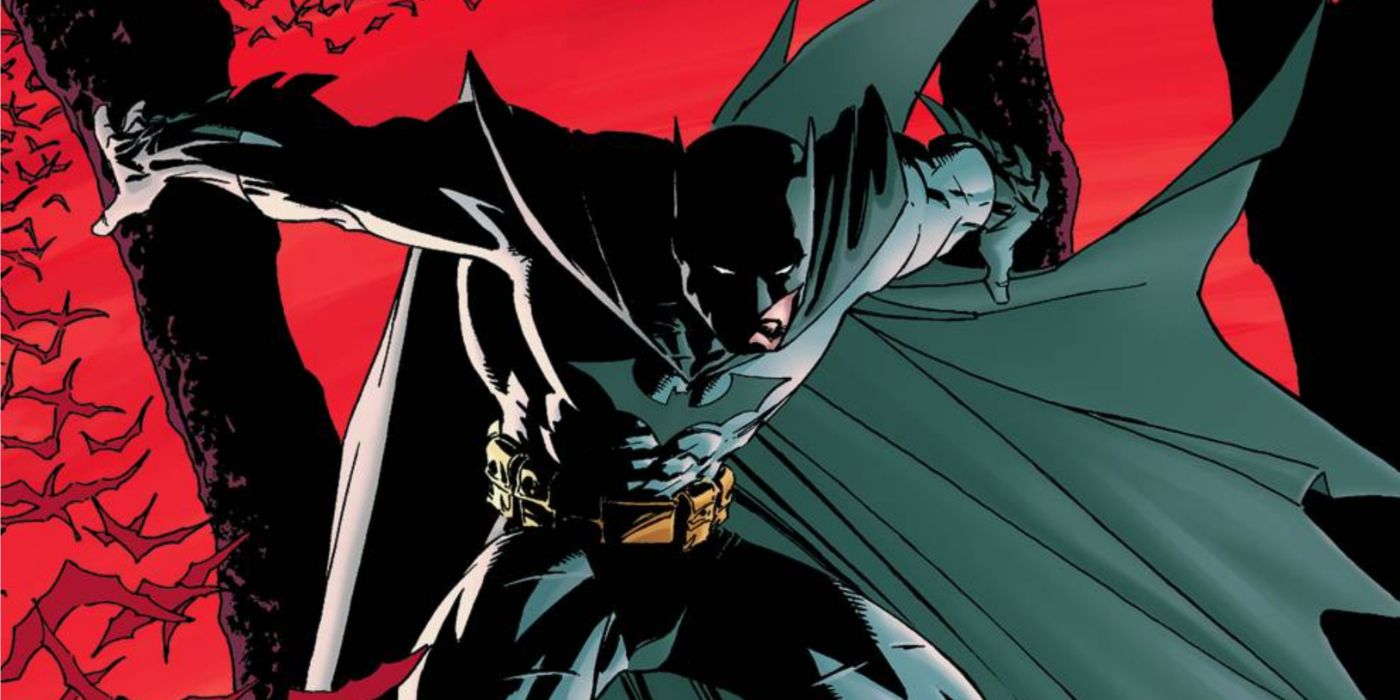
Batman has been a central figure in comic books ever since he first appeared in 1939. Many of his most memorable adventures have profoundly impacted Bruce Wayne’s life. He’s rightfully known as the World’s Greatest Detective, consistently unraveling difficult mysteries within the dangerous city of Gotham. Faced with criminals who prey on fear, he always has a challenging job ahead of him.
The most compelling Batman stories often delve into who he really is as a person, examining and even dismantling his established image. This has led to significant changes for Bruce Wayne, both in how we see him and in the details of his past. Given Batman’s long history and impact on comics, it’s not surprising that so many iconic storylines have permanently reshaped the character.
Batman: Year One Redefined Bruce Wayne’s Origin Story
Batman #407-410 (1987)
Following the success of his acclaimed Batman: The Dark Knight Returns, Frank Miller collaborated with David Mazzucchelli to tell Batman’s origin story in “Year One.” This story shows readers the pivotal moment when Bruce Wayne’s parents, Martha and Thomas, are murdered—the event that inspires him to become a crime-fighting hero. Years later, as an adult, Bruce becomes Batman, determined to clean up corruption in Gotham City. At the same time, newly arrived police officer James Gordon faces similar challenges within the city.
“Year One” is widely considered the best Batman origin story, delving into Bruce Wayne’s motivations and his developing relationship with Gordon. It set such a high standard that most other stories about a new Batman feel like they come after it. For example, acclaimed books like Matt Wagner’s Batman and the Monster Men and Ed Brubaker & Doug Mahnke’s Batman: The Man Who Laughs actually build upon the foundation laid by “Year One,” demonstrating its lasting influence on the character.
A Death in the Family Pushed Bruce Wayne’s Mental State to the Edge
Batman #423-429 & Annual #12, Detective Comics #590-595 & Annual #1 (1988)
In 1988, a storyline called “A Death in the Family,” created by Jim Starlin, Jim Aparo, and Mike DeCarlo, presented Bruce Wayne with his most devastating experience since his parents’ murder. The story starts with the Joker kidnapping and brutally beating Jason Todd, ultimately leaving him to die in an explosion. Discovering the critically injured Robin pushes Batman past his limits, leading him to seek personal revenge against the Joker.
Look, I’ve played a lot of Batman stories, and losing the first Robin, Dick Grayson, was rough, but Jason Todd’s death? That hit hard. It totally changed how I saw Batman and his relationships with his sidekicks. It felt like something broke inside him, and honestly, it broke me as a player too. It really showed me Batman isn’t invincible; he’s a guy with limits, and I almost expected him to cross the line and go way too far in his quest for revenge. It was a seriously intense moment.
Tower of Babel Cemented the God-Tier Batman Era
JLA #43-46 (2000)
Batman had faced challenges before, but his accidental involvement in the “Tower of Babel” storyline fundamentally altered his relationships with his allies. This story exposed that Bruce Wayne had secretly created plans to disable his friends should they ever become villains. When Ra’s al Ghul obtained these plans, he was able to convincingly defeat the Justice League, and the team lost trust in Batman after they recovered.
The ‘Tower of Babel’ storyline is best remembered for establishing the idea of Batman as a virtually limitless strategist – able to prepare for any situation with enough time. It also marked a turning point for the character, shifting Bruce Wayne away from a more optimistic portrayal and towards a relentlessly cynical antihero driven by distrust. Ultimately, the story revealed that his views on metahumans were surprisingly similar to those of Lex Luthor, despite his own heroic intentions.
Absolute Batman Changed Bruce Wayne For the 2020s
Absolute Batman #1 (2024)
In 2024, DC Comics began its ‘Absolute Universe’ line with the release of Absolute Batman, a new take on the classic hero. This version of the story takes place in a different Gotham City where Bruce Wayne is a physically imposing, blue-collar worker fighting against a group of wealthy villains. He uses an axe and works with updated versions of his usual allies to defeat enemies like Bane and the Joker.
Even if some longtime fans resist the comparison, Absolute Batman is achieving a similar level of popularity and cultural impact as Batman: The Dark Knight Returns did in the 1980s. It’s likely that future Batman creators will look to the work of writer Grant Morrison and artist Andrea Sorrentino for inspiration. Currently, in 2026, this version of Batman has become the most defining story outside of the main comic book timeline, and it shows no signs of losing momentum.
Batman and Son Officially Made Bruce Wayne A Father
Batman #655-658 (2006)
Grant Morrison’s run on the Batman comics is known for diving deep into Bruce Wayne’s psychology, and a standout story arc is “Batman and Son.” This is where Bruce discovers he has a son, Damian Wayne. The story follows their difficult attempt to connect, complicated by a battle against an impostor Batman and Damian’s mother, Talia al Ghul.
Bruce Wayne was no stranger to fatherhood, having raised several adopted sons like Dick Grayson. However, raising Damian – “Son of Batman” – presented an entirely new level of challenge and responsibility. Their relationship was particularly difficult, as Damian constantly questioned Bruce’s principles. This also unexpectedly tied Bruce even more closely to the Al Ghul family than ever before.
Bane’s Worst Crime Was the Murder of Alfred
Batman #77 (2019)
The climax of Tom King’s Batman comic series featured the ‘City of Bane’ storyline, where Batman faced a powerful alliance between the villain Bane and Thomas Wayne, a version of Batman from an alternate timeline. In a shocking move designed to destroy Bruce Wayne, Bane invaded Wayne Manor and killed Alfred Pennyworth. Devastated by the loss of his father figure, Bruce confronted both villains, ultimately gaining the upper hand against Bane, a foe he’d previously battled in the ‘Knightfall’ storyline.
The decision to kill off Alfred during a storyline that was already causing debate deeply upset many Batman fans, with numerous readers calling for his return. Surprisingly, DC Comics has maintained this choice, keeping Alfred dead as a way of showing that actions have lasting consequences in Gotham City. Though tragic, it serves as an important reminder for Bruce Wayne about the reasons behind his fight, and the impact of Batman #77 is still felt throughout the series.
The Debut of Dick Grayson Gave Batman A New Family
Detective Comics #38 (1940)
In 1940, Bob Kane, Bill Finger, and Jerry Robinson created Batman’s first partner: Dick Grayson, who was introduced in Detective Comics #38. The story explains how Dick became the original Robin – a young circus performer who becomes an orphan after his parents are killed. Bruce Wayne takes him in, and together they investigate the crime, beginning a friendship that would last for decades.
Batman and Robin are arguably the most famous and significant duo in comic book history, largely because their relationship made Bruce Wayne a more relatable character. Despite often appearing dark and emotionally detached, Bruce’s adopted sons helped keep him connected to his humanity. Dick Grayson, in particular, served as Batman’s moral compass, preventing him from crossing the line in his fight against crime.
Batman’s Most Vicious Joker Story Reignited Their Rivalry
Batman: The Killing Joke (1988)
Published in 1988, Batman: The Killing Joke by Alan Moore and Brian Bolland revitalized the classic conflict between Batman and the Joker. The story centers on the Joker’s attempt to drive Batman to madness by terrorizing Commissioner Gordon and his family. As the situation escalates, Batman races against time to save those he cares about before the Joker goes too far.
Prior to 1988, fans debated who Batman’s greatest enemy was, often mentioning villains like The Riddler, Two-Face, and The Penguin. However, after this particular graphic novel was released, the Joker clearly became known as Batman’s most terrifying opponent. The story concluded with a deliberately unclear ending, solidifying its place as the most important and iconic portrayal of their rivalry in comic book history.
Frank Miller Redefined Bruce Wayne For A Generation
Batman: The Dark Knight Returns #1-4 (1986)
Frank Miller and Klaus Janson’s Batman: The Dark Knight Returns was a huge hit, instantly establishing a new vision for Batman at DC Comics. The story features Bruce Wayne coming out of retirement to fight a surge in crime, becoming an inspiring figure for Gotham’s citizens once more. It’s considered the definitive Batman tale, focusing on what truly makes the character great.
This take on Bruce Wayne launched a trend of darker, grittier stories at DC Comics, impacting writers like Scott Snyder and Jeph Loeb. It’s become the standard for keeping Batman popular – most top-tier comic book authors since the 1990s have used it as inspiration. That’s why The Dark Knight Returns is essential reading; it explains a lot about how Batman is portrayed and interpreted now.
Bill Finger and Bob Kane Gave Batman His Whole World
Batman #1 (1940)
Just a year after his first appearance in Detective Comics #27, Batman got his own comic book series with Batman #1, created by Bill Finger and Bob Kane. Though it’s often overshadowed by his debut, this issue is significant because it introduced two key characters: The Joker, who became Batman’s greatest enemy, and Catwoman, who would become a major love interest.
While elements of Batman’s story existed before, his world truly came to life with his first appearance in a comic series in the 1940s. This debut issue is incredibly influential – it’s hard to overstate how important it is to understanding Batman today. Batman #1 introduced two of his most iconic foes, The Joker and Catwoman, fundamentally changing Bruce Wayne’s life and relationships within the DC Universe.
2026-07-29 21:09